

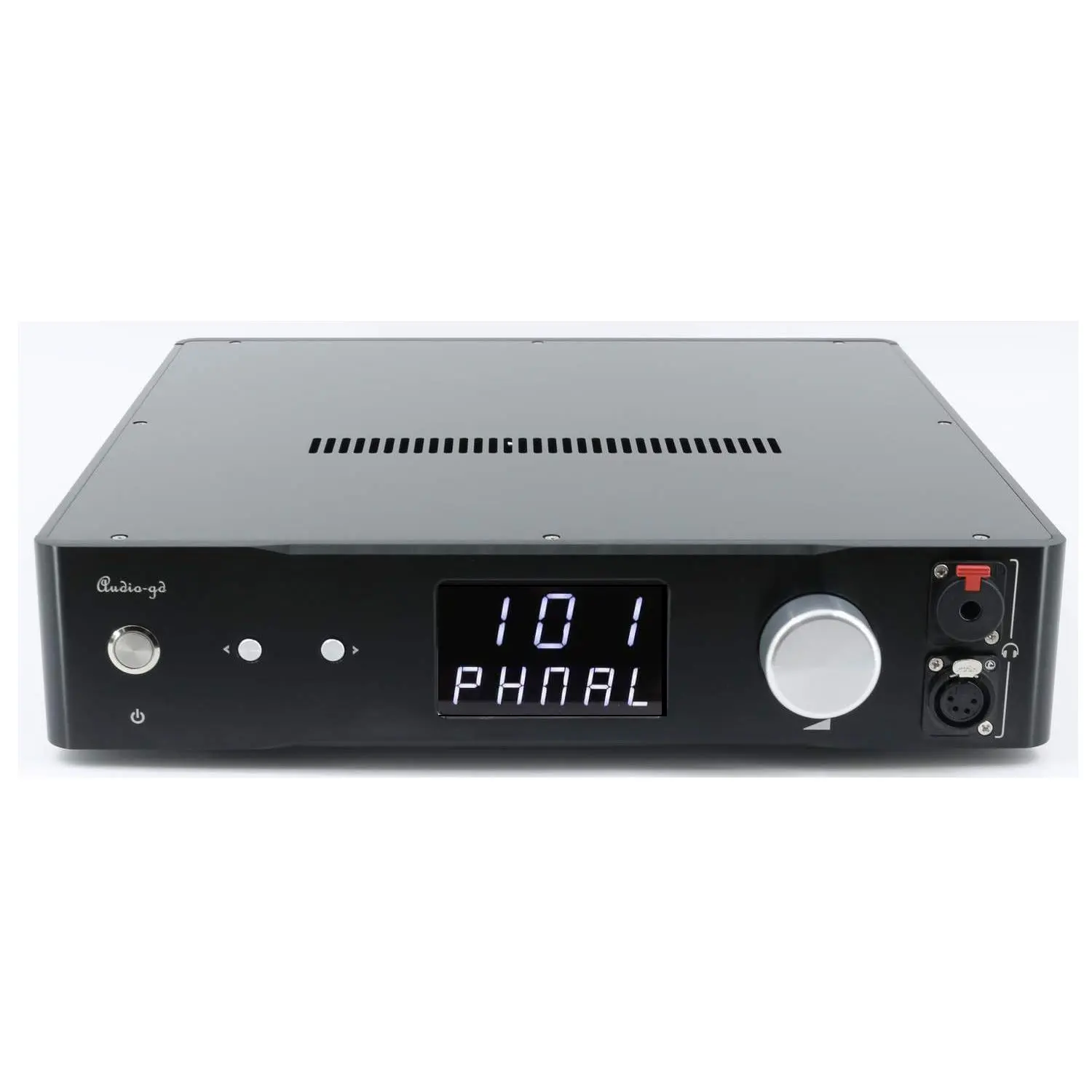


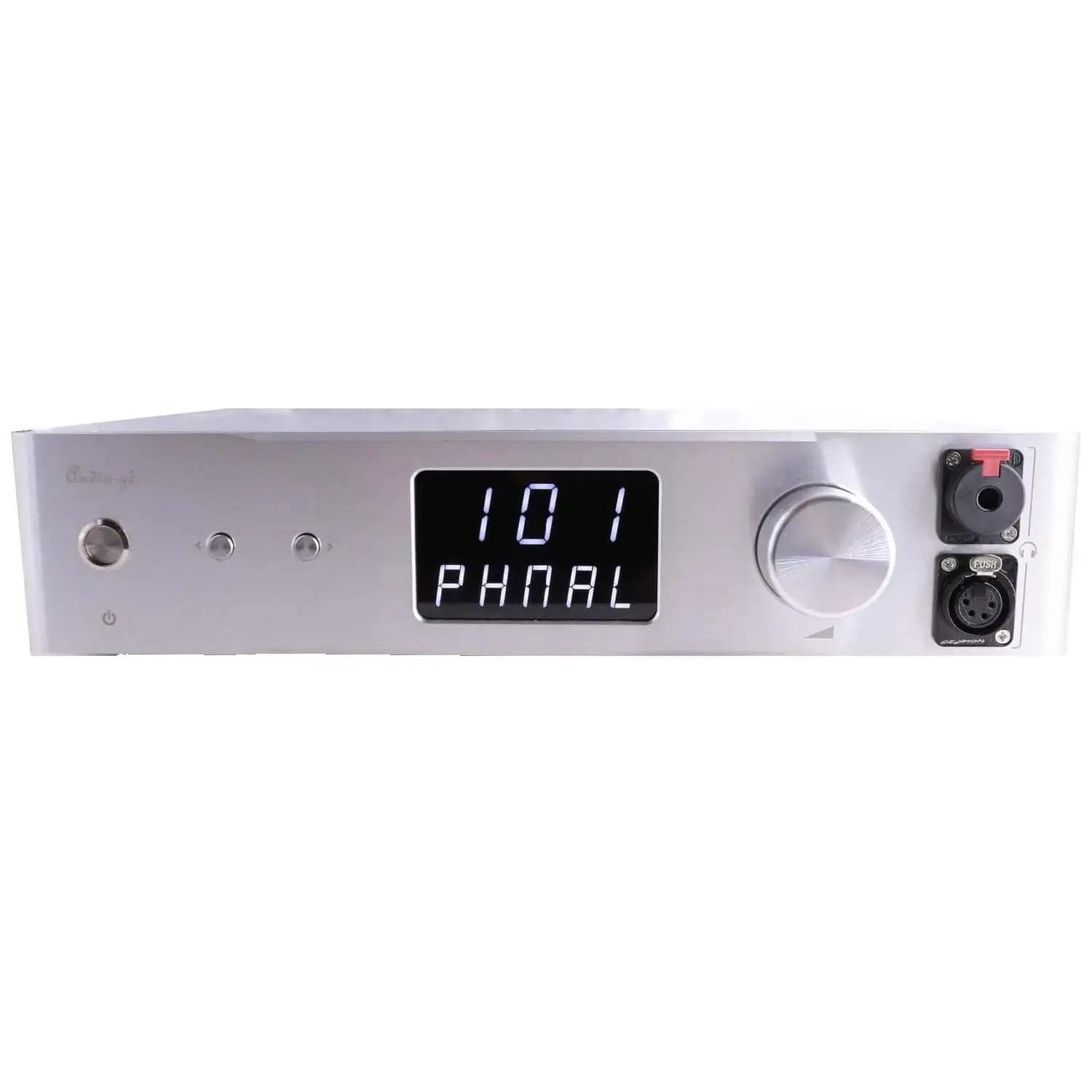

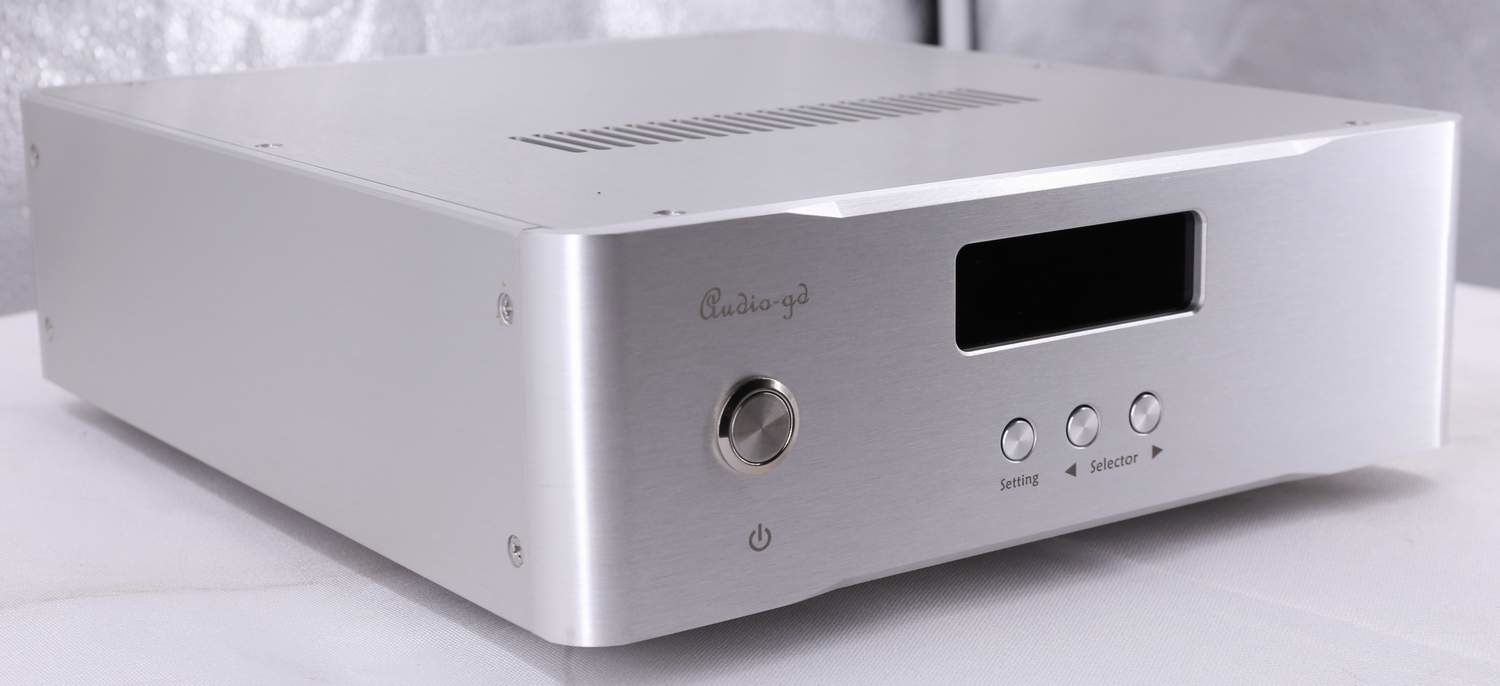
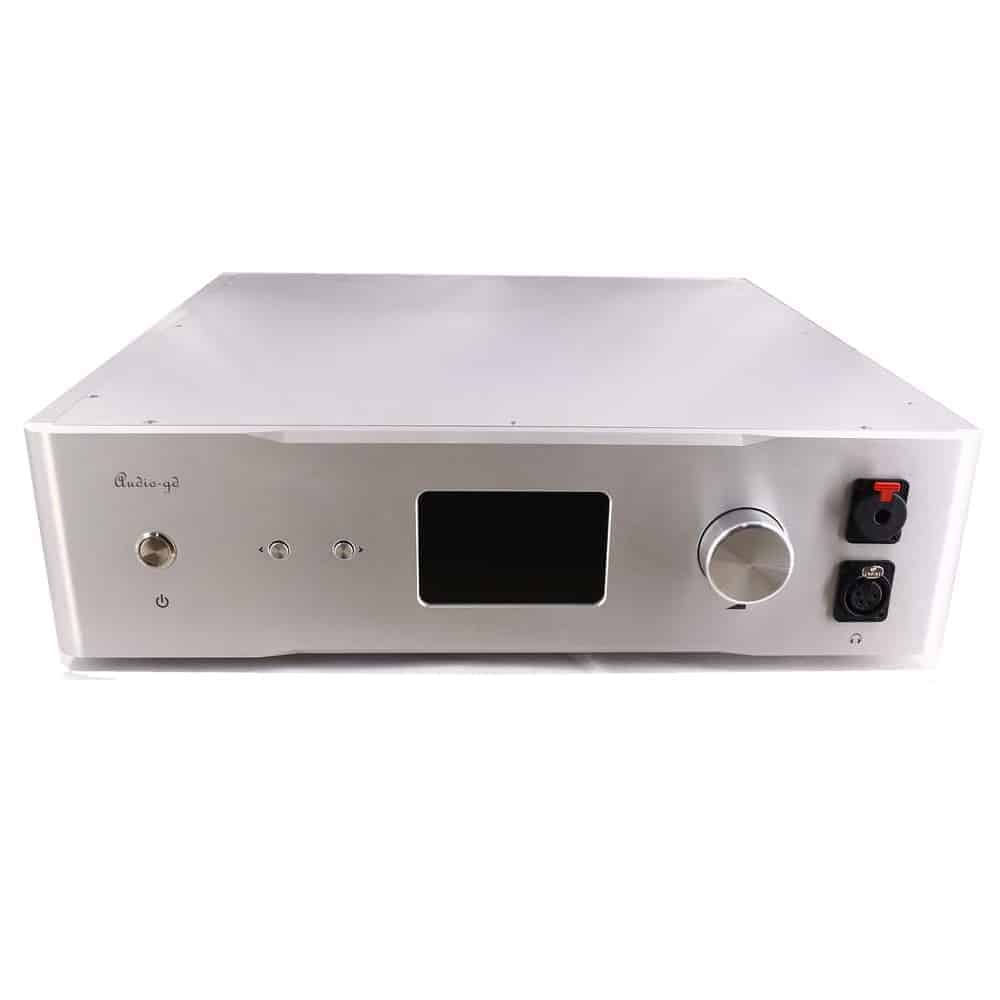
AUDIO-GD MASTER-9 MK3
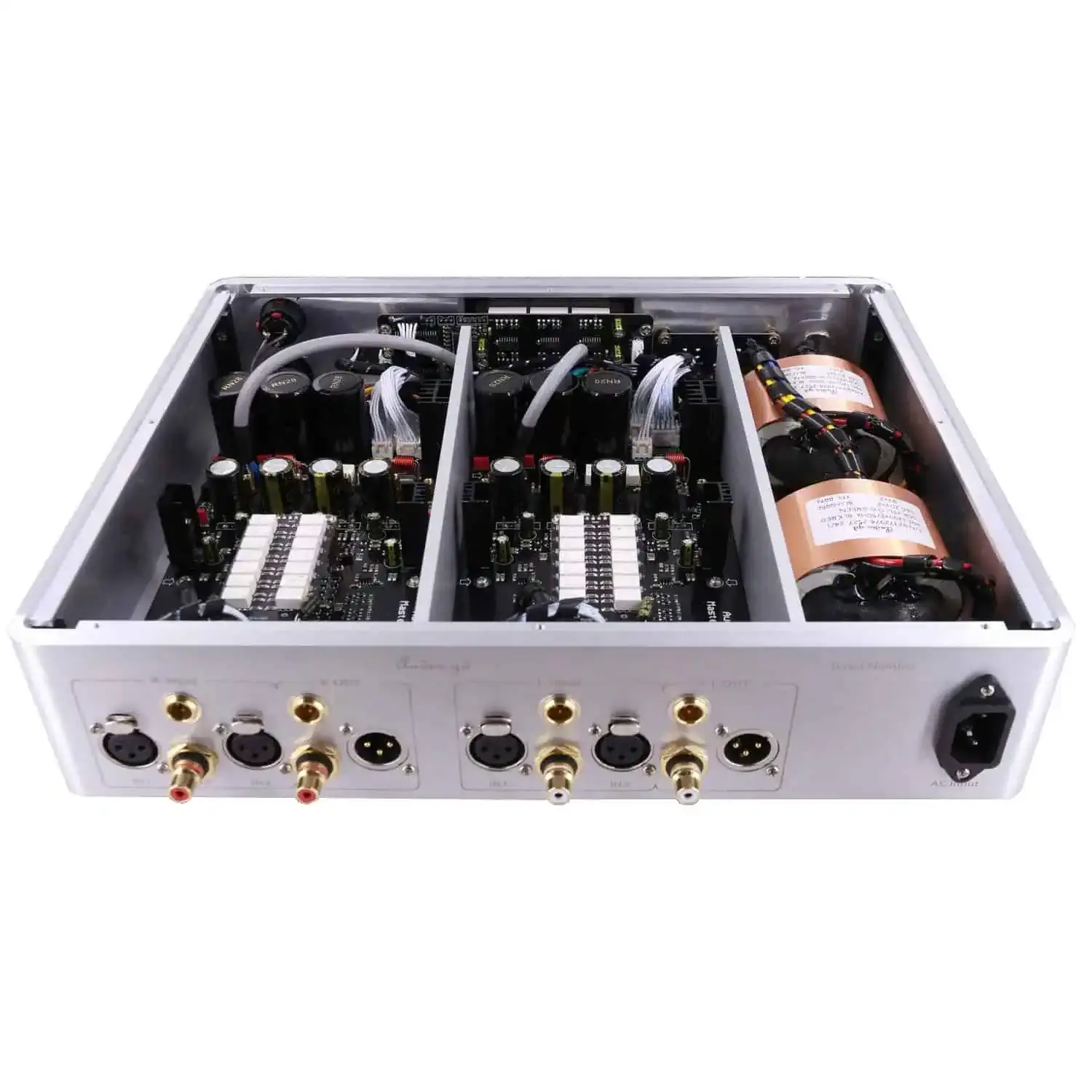
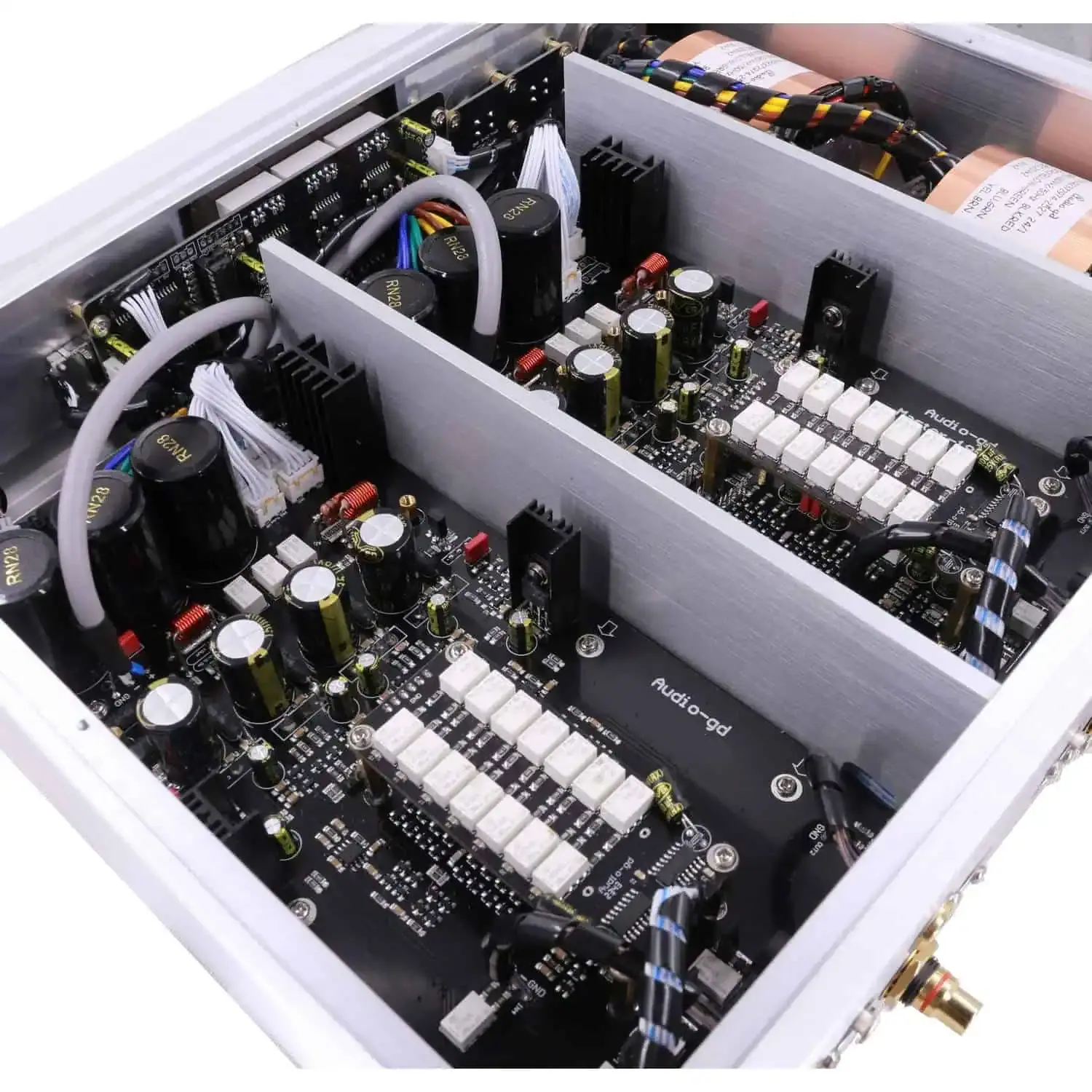
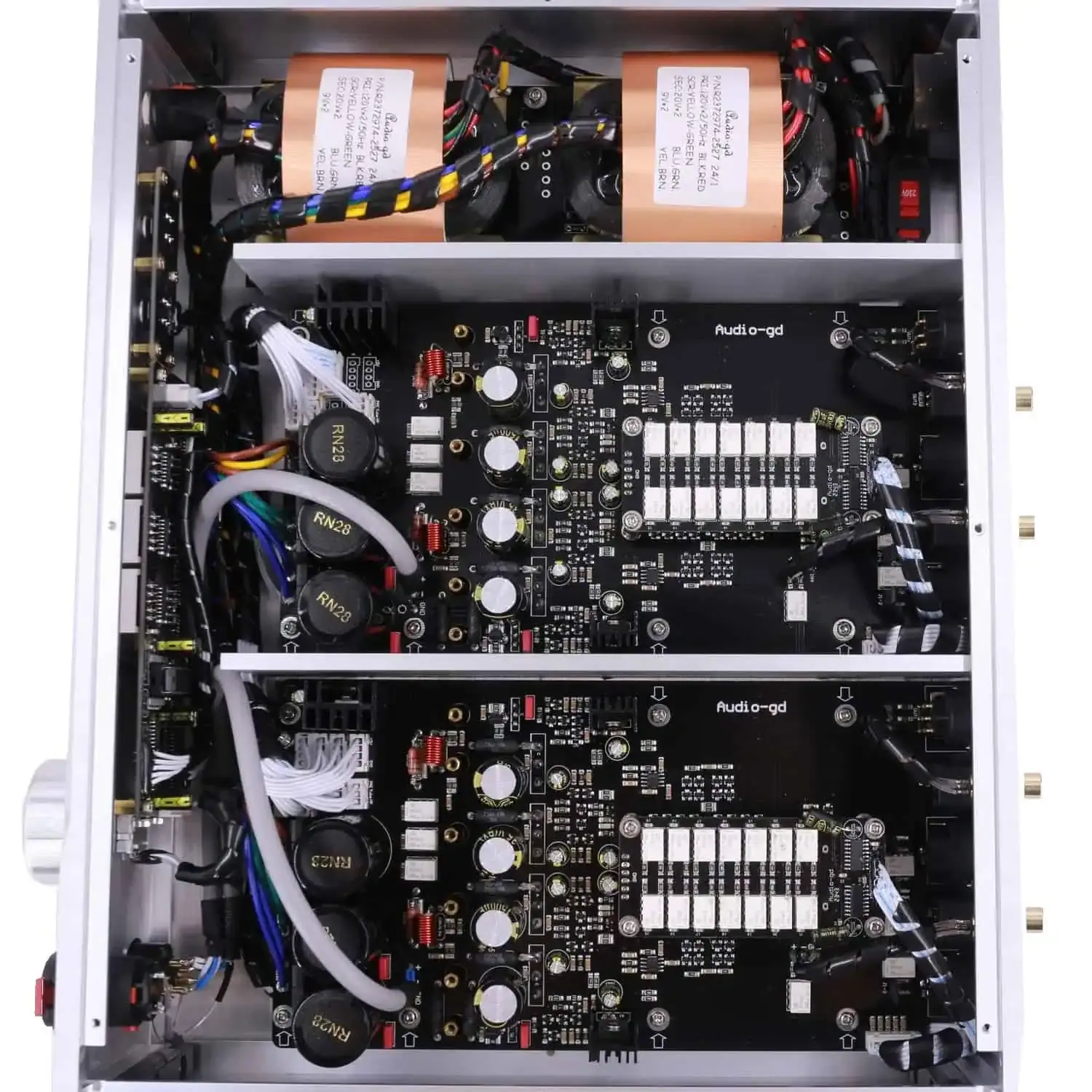
Dual mono design, using two R-core transformers for separate power supplies for the right and left channels. It features a non-feedback ACSS gain stage and a non-feedback diamond output stage. Fully balanced pure class A design is built by discrete analog stages without any opamp chips or coupling capacitors (only DC coupled) in the signal path. In total 8 x matching 150W transistors (totaling 1200W) used in the output stages to implement oversized class A output power. More than 32,000uF audio grade NOVER from UK capacitors and 4 groups pure class A Power regulators are used to ensure ample and smooth power delivery. A four-channel 100 steps digitally controlled relay-based volume control avoids channel imbalance and improves sound quality. It offers maximum of 16.25dB gain with 2 types of gain modes, which can drive low sensitivity headphones easily.
The Master 9 features a true dual mono and true balanced design, employing the newest ACSS design to enhance XLR connections to sound as good as the ACSS connection. Despite their apparent complexity, they are in fact the simplest design the world has ever seen, with numerous components dedicated to processing the power supply. Utilizes an ultra-low distortion single-stage ACSS amplifier, with the simplest and shortest signal path providing the most neutral and least colored sound. Components are soldered directly onto the motherboard. The ACSS is a non-feedback technology comprised of discrete amplifiers. While most people are familiar with global feedback designs offering better specs in test measurements, non-feedback designs may not perform as well in tests but can offer superior sound to the human ear. This creates a conflict in classic circuits. However, the ACSS introduces a new paradigm by offering a least coloration sound, which is more neutral with very low distortion and high linearity. As a result, it retains dynamics, detail, and neutral sound without sounding bright or harsh. All signal gain is in current mode, with all transistors operating in pure class A mode.
MASTER 9 MK3 IN- & OUTPUTS
INPUTS
- 2x XLR balanced
- 2x RCA single ended
- 1x ACSS balanced (mini-xlr)
OUTPUTS
Preamp output
- 1x XLR
- 1x RCA
- 1x ACSS
Headphone outputs
- 1x 4-Pins XLR Balanced
- 1x 6.3mm jack Single Ended
TECHNICAL SPECIFICATIONS
| Specifications provided by the manufacturer | |
|---|---|
| Product type | Preamplifier Headphone amplifier |
| Inputs | 1x Single-ended RCA 2x Balanced XLR 1x ACSS |
| Outputs | 1x Single-ended RCA 1x Balanced XLR 1x ACSS (mini-xlr) 1x Single-ended Jack 6.35mm headphone output 1x Balanced XLR 4 poles headphone output |
| SNR | > 130dB |
| THD | < 0.003% |
| THD+N | < 0.005% |
| Adjustable gain | Low : +16dB (XLR) High : +25dB (XLR) |
| Headphone output power (balanced, Class A) | 9000mW @ 40Ω 3800mW @ 100Ω 1250mW @ 300Ω 175mW @ 600Ω |
| Headphone output power (single-ended, Class A) | 2500mW @ 40Ω 1050mW @ 100Ω 350mW @ 300Ω 175mW @ 600Ω |
| Preamplifier output level | RCA : 10V XLR : 20V ACSS : 2.4+2.4MA |
| Output impedance | 1Ω |
| Input impedance | XLR : 90kΩ ACSS : < 10Ω |
| Frequency response (XLR input) | 20Hz – 20kHz (+/-0dB) 1Hz – 220kHz (+0dB, -3dB) |
| Crosstalk | > 130dB |
| GENERIC | |
|---|---|
| Supply voltage | 110-240VAC 50/60Hz |
| Consumption | 45W |
| Weight | Approx. 8kg |
| Dimensions | 360 x 290 x 75mm |
| Package | 1x Audio-GD Master 9 mk3 1x remote control 1x Power cable |
RELAY BASED VOLUME CONTROL
Conventional volume control technology design is through a volume potentiometer to reduce the otuput signal . The volume pots quality effect the sound quality directly, low quality volume potentiometers but even high quality are caussing loss of detail and channels imbalance resulitng in soundstage distortion . Even the high
Volume control design of the Master 9 consist of relay-controlled attenuators. Fully-independent, fully-balanced stereo volume controls. The volume controls feature consist of high-precision 0.05% tolerance film resistors and golden contact relays. Buffered inputs and outputs.There 4 channels volume boards are built in the unit to achieve ultimate balanced volume control. They are controlled by a digital signal controlling the high quality relays switching the precision resistors in analog area.
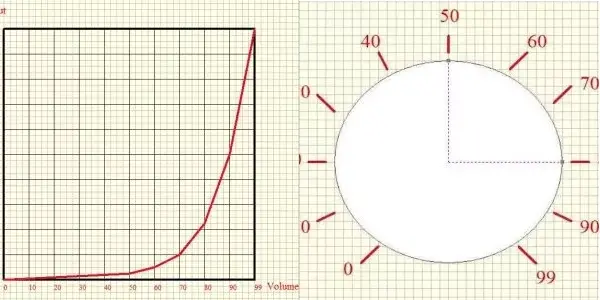
Quality of volume control is very important in balanced applications . It have to effectuate the four channels to work as synchronous as possible to keep the balanced signal in perfect shape. In traditional volume controls the balanced output will introduce distortion which will negatively influence sound quality and performance and might even get worse than a single ended setup and waste the advantages of balanced designed solution.
Đang cập nhật
Đang cập nhật










.png)